
Buying a home: the sequence and why the order matters
What happens in what order when a home is bought, and why that order?
A purchase is a sequence of gates. Each one exists so that a specific class of unpleasant surprise is discovered while it is still cheap to act on. People who find the process stressful usually took the gates out of order.
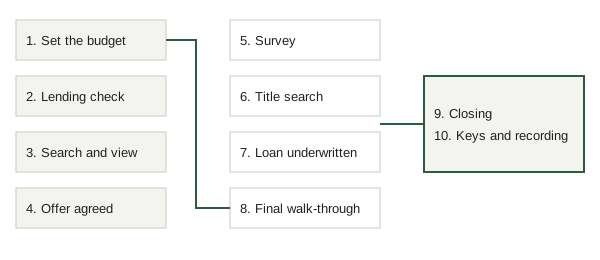
1. Set the budget before you look
Not the loan you could obtain: the total monthly cost you are willing to carry, including taxes, insurance, heating, maintenance reserves and the cost of commuting from that particular address. The blank cost worksheet on this site lists the categories. Looking at homes before this number exists is how people end up wanting something they have to argue themselves into.
2. Get the lending position established
A lender's written assessment of what you can borrow does two things: it disciplines the search, and it makes an offer credible to a seller who is choosing between offers. It is not a loan. The real underwriting happens later and depends on the property as well as on you.
3. Search and view
Viewings are for gathering facts, not for falling in love. Carry a written sheet, look at the boring things (water, heat, structure, drainage, permits) before the pretty things, and see the same street at a different hour and in bad weather. The viewing notes sheet exists for this.
4. Offer and the agreement
An accepted offer is where the transaction becomes a document. The important content is not the number; it is the conditions. What is the deposit, what happens to it, and under what circumstances may you withdraw without losing it? Which findings from a survey allow renegotiation? What is the time limit on each of those? These conditions are the entire protection of the buyer, and they are agreed before anyone has inspected anything.
5-6. Survey, inspection and title
Two independent questions are asked in parallel: is the building sound and where exactly does the property lie, and is the ownership clean and transferable? These are different professions asking different questions, and both are necessary. See surveys and title.
7. Underwriting
The lender now assesses the property as security as well as the borrower. A valuation below the agreed price is a common and genuine obstacle: the lender lends against its own figure, not against the price agreed between two people. The gap has to be closed by renegotiation, more deposit, or withdrawal.
8-10. Walk-through, closing, recording
The final walk-through confirms the property is in the condition agreed and that what was to remain has remained. Closing is the exchange of money for the deed, alongside the settling of taxes, fees and the payoff of the seller's existing loan; see closing costs. Recording puts the transfer on the public register, which is what makes ownership good against the world rather than merely against the seller.
The two failure modes
- Skipping a gate to move faster. Waiving inspection or title work in a competitive market converts an unknown into a risk you have agreed to bear personally. Sometimes people choose that knowingly; the sequence at least makes the choice visible.
- Doing the gates out of order. Paying for a survey before conditions are agreed, or agreeing a price before the budget exists, spends money and leverage at the point where you have least of both.